
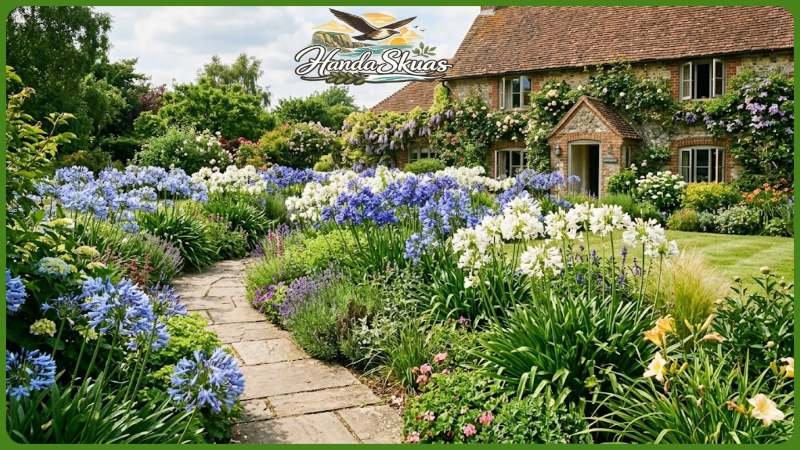
The Ultimate Agapanthus Care Guide: From Bulbs to Blooms
Whether you are looking for the deep, moody hues of blue or, alternatively, the crisp, clean aesthetic of a white, these plants are versatile enough to suit any landscape. In this extensive guide, we will explore everything you need to know about agapanthus care. To begin with, we will cover selecting the right bulbs and, subsequently, understand how these plants can transform your living space through agapanthus interiors. Furthermore, we will delve into the technicalities of soil, light, and winter protection.
1. Introduction to the Agapanthus Plant
The agapanthus is, in essence, a genus of herbaceous perennials that originally hails from Southern Africa. In the UK, however, they are prized for their unique ability to provide late-summer colour. This is particularly useful when many other garden plants are beginning to fade. Furthermore, an agapanthus plant is characterised by its thick, fleshy roots (rhizomes) and its tall, sturdy flower stalks. Consequently, these stalks can reach up to 1.2 metres depending on the variety.
Evergreen vs. Deciduous
Before you buy, it is vital to know that there are two main types of agapanthus.
- Evergreen varieties: These keep their leaves all year round. Nevertheless, they are generally more tender and, as a result, require protection from harsh UK frosts.
- Deciduous varieties: Conversely, these lose their leaves in winter. Therefore, they are much hardier, making them a popular choice for northern gardens.
Whether you choose a classic agapanthus africanus or a modern hybrid, understanding the specific needs of your chosen agapanthus plant is the first step toward a successful bloom. In addition to this, knowing the difference between these types will help you plan your winter garden maintenance more effectively. If you are planning your spring planting schedule, you might also want to read more about when to plant sunflower seeds to ensure a vibrant, golden display alongside your agapanthus.
2. Selecting and Planting Agapanthus Bulbs
The journey to a breathtaking floral display begins with high-quality agapanthus bulbs. Technically, however, these are not true bulbs but rhizomes. In other words, they are thickened underground stems that store energy.
 Position your agapanthus bulbs about 5cm deep in well-drained soil for the best results.
When to Plant
The best time to plant agapanthus bulbs is during the spring, typically between March and May. By doing this, you allow the plant to establish its root system before the heat of summer arrives. If you miss this window, you can alternatively plant container-grown versions later in the season, although they may take longer to settle.
How to Plant
- Site Selection: First and foremost, these plants are sun-worshippers. Therefore, ensure the spot receives at least 6 to 8 hours of direct sunlight. Without this, your blooms will be sparse.
- Soil Preparation: In addition, they require well-drained soil. If your garden has heavy clay, you should incorporate plenty of grit or organic matter to improve drainage. Consequently, this prevents root rot.
- Planting Depth: Next, place your agapanthus bulbs approximately 5cm below the surface. If you plant them too deep, it may prevent flowering altogether.
- Spacing: Finally, leave about 30–45cm between plants. Although beginners often ask, “do agapanthus spread?”, providing initial room ensures they do not become overcrowded.
3. Agapanthus at a Glance: Quick Summary Table
For those who want a quick summary, here is a snapshot of the essential requirements for your agapanthus care routine.
| Feature | Requirement / Detail |
|---|---|
| Common Name | Lily of the Nile / African Lily |
| Focus Name | Agapanthus |
| Best Planting Time | Spring (March to May) |
| Sunlight Needs | Full Sun (6–8 hours daily) |
| Watering | Regular during growth; drought-tolerant once established |
| Soil Type | Well-drained, fertile soil |
| Best for Pots | Twister, Black Jack |
| Spreading Habit | Yes, do agapanthus spread via rhizomes slowly |
| Flower Colours | blue, white, bicolor (Fireworks) |
| Indoor Use | Excellent for interiors (Vase life 10–14 days) |
| Hardiness | africanus and deciduous types are most hardy |
4. Popular Varieties to Transform Your Garden
The world of agapanthus has evolved significantly over the last decade. Consequently, modern breeding has introduced stunning bicolours and deep pigments that were previously unavailable.
Agapanthus Black Jack
If you want to make a bold statement, agapanthus black jack is the variety for you. Specifically, it features incredibly dark, near-black purple flower heads. In comparison to older types, this award-winning plant is more compact and produces more flowers. Furthermore, pairing black jack with a bright white creates a sophisticated, high-contrast look that is perfect for contemporary designs.
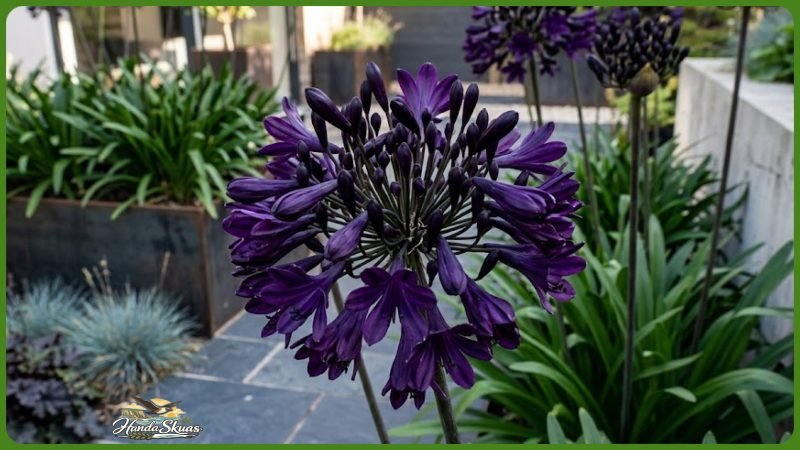 The award-winning Agapanthus Black Jack features near-black purple blooms for a modern look.
Agapanthus Fireworks
Similarly, fireworks offers an explosion of colour. The flower heads are bi-coloured, being white on the outside and a vibrant blue at the base. However, it is a slightly more tender variety. Thus, it thrives best in a sheltered spot or a dedicated container. For this reason, many gardeners treat it as a focal point in their display.
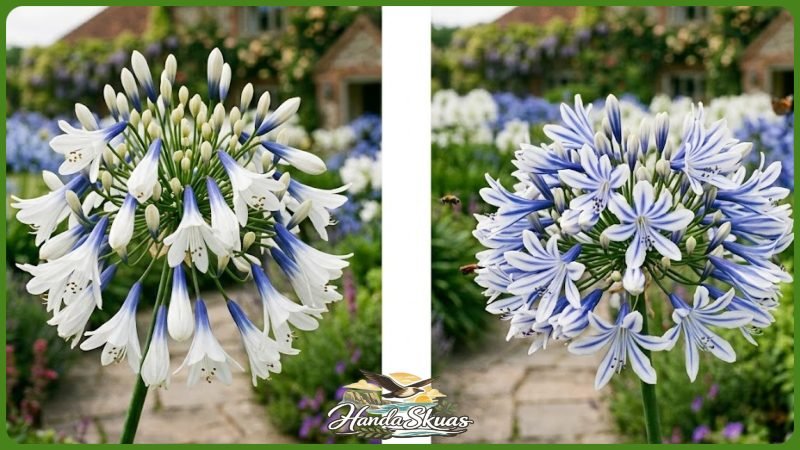 The stunning bicolour petals of Agapanthus Fireworks (left) and Agapanthus Twister (right).
Agapanthus Twister
Moreover, agapanthus twister is another spectacular bicolour option. It features crisp white petals with a distinct blue base. Because it is a deciduous variety, it is surprisingly hardy. Likewise, agapanthus twister benefits from consistent agapanthus care during its first year. As it matures, it creates a stunning visual “twist” in your flower beds.
Agapanthus Africanus
For a reliable, traditional look, agapanthus africanus is the go-to choice. It produces large, rounded heads of mid-blue flowers. Indeed, it is the quintessential agapanthus blue that most people envision. In addition to its beauty, it is known for being extremely resilient in a variety of soil types. To read more about the RHS Award of Garden Merit (AGM) plants, click here.
5. Comprehensive Agapanthus Care Routine
To ensure your agapanthus plant thrives for years, you must master the following maintenance steps. Consistency is, in fact, the key to success.
Sunlight and Positioning
Sunlight is, without a doubt, the most important factor in agapanthus care. Otherwise, the plant will produce lush green leaves but very few flower stalks. For this reason, a south-facing or west-facing border is ideal. If you live in a particularly shady area, you might consider moving your agapanthus in pots to the sunniest spot on your patio.
Watering and Feeding
- Watering: Although established plants are drought-tolerant, you must water your agapanthus bulbs regularly at first. During the flowering period, ensure the soil stays moist. If the soil dries out completely, the flowers may drop prematurely.
- Feeding: Initially, use a balanced fertiliser in the spring. Once flower buds appear, switch to a high-potash fertiliser (like tomato feed). Consequently, this will encourage larger, more vibrant blooms and strengthen the agapanthus bulbs for the following season.
Deadheading
Once the flowers have faded, you should cut the stalks down to the base. By doing so, you prevent the plant from wasting energy on seed production. Instead, that energy is directed back into the agapanthus bulbs. However, if you enjoy the look of the dried seed heads, you can leave a few for winter interest.
6. Mastering Agapanthus in Pots
Many gardeners prefer growing agapanthus in pots. This is not only for space-saving; rather, it is a clever horticultural trick that yields better results.
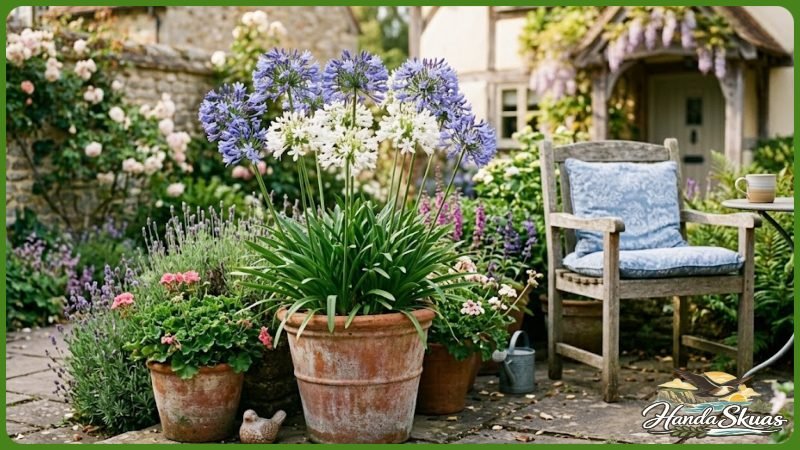 Growing Agapanthus in pots on a cozy patio can actually encourage more blooms.
Why Grow in Pots?
Surprisingly, agapanthus often flowers better when its roots are slightly pot-bound. This slight stress signals the plant to produce flowers instead of leaves. Furthermore, growing agapanthus in pots allows you to move tender varieties like agapanthus fireworks indoors during the winter. This flexibility is, therefore, a massive advantage for UK gardeners.
- The Pot: To begin with, use a heavy pot to prevent it from toppling over in high winds.
- The Mix: In addition, use a loam-based compost mixed with plenty of grit for drainage.
- Variety Choice: For instance, compact varieties like agapanthus twister or agapanthus black jack are perfect for container life.
In summary, remember that agapanthus in pots will require more frequent watering and feeding than those in the ground. Nonetheless, the rewards are well worth the extra effort.
7. The Growth Habit: Do Agapanthus Spread?
A common query from new gardeners is: do agapanthus spread?
In short, the answer is yes. However, they are not invasive. Instead, an agapanthus plant spreads via its underground rhizomes to form thick, lush mounds. Over time, a single plant can double or triple in width. Because do agapanthus spread, you may eventually notice that the plant becomes overcrowded.
How to Manage Spreading
When the plant becomes too large, you may notice fewer flowers in the centre. Therefore, this is a clear sign that it is time to divide the plant. Simply lift the clump in the spring and split it into smaller sections with a sharp spade. Consequently, you will have more plants to place elsewhere in your garden.
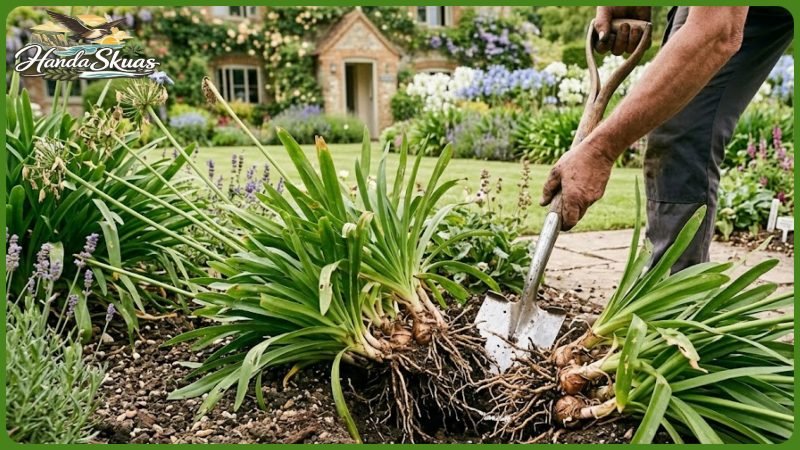 Dividing agapanthus plants every few years keeps them healthy and encourages better flowering.
8. Agapanthus Interiors: Bringing Elegance Inside
The beauty of this plant is not limited to the garden. On the contrary, agapanthus interiors is a major trend in floral design. Because of their long, sturdy stems, they make excellent cut flowers that can last for weeks.
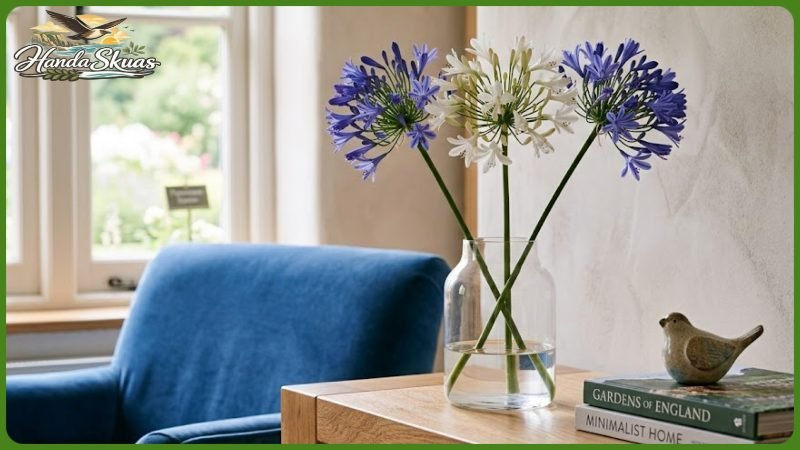 Agapanthus interiors styling adds a touch of architectural luxury to any room.
Decorating with Agapanthus:
- Minimalist Design: For example, a single stem of agapanthus blue creates a striking focal point in a modern home.
- Wedding Floral: Similarly, the white agapanthus is a popular choice for summer weddings due to its elegant appearance.
- Dried Seed Heads: Even after the petals fall, the seed heads can be used in agapanthus interiors for an autumnal look.
Ultimately, integrating agapanthus interiors into your home decor is a great way to enjoy your gardening labour indoors. It adds a touch of architectural luxury to any room.
9. Troubleshooting Common Problems
Even with the best agapanthus care, you may encounter a few hurdles. Fortunately, most of these are easy to fix.
1. No Flowers (Blindness)
This is usually caused by a lack of sunlight. Alternatively, it might be because you planted the agapanthus bulbs too deep. Therefore, check the positioning and ensure no other plants are shading it.
2. Yellowing Leaves
If the leaves of your agapanthus africanus turn yellow in summer, it could be a sign of waterlogging. On the other hand, if it happens to a deciduous variety in winter, it is merely the plant going dormant. In that case, simply cut the dead leaves back.
3. Pests
Slugs and snails love the young shoots of an agapanthus plant in the spring. To prevent this, use organic pellets or copper tape. In addition, keep the area around the base of the plant clear of debris.
10. Winter Care and Protection
In the UK, winter protection is a vital part of agapanthus care. Since the weather can be unpredictable, being prepared is essential.
- For Evergreen Types: First, mulch the base heavily with straw or compost. Furthermore, you can wrap the foliage in horticultural fleece during extreme cold.
- For Deciduous Types: These are generally hardy and can withstand lower temperatures. Nonetheless, a thin layer of mulch over the agapanthus bulbs will help protect the crown.
- For Potted Plants: Finally, move your agapanthus in pots to a frost-free shed or conservatory if temperatures drop below -5°C. This ensures the roots do not freeze solid.
11. Conclusion: Why Every Garden Needs an Agapanthus
In conclusion, the agapanthus is more than just a flower; it is a structural masterpiece. From the stunning bicolours of agapanthus twister to the deep, enchanting tones of agapanthus black jack, there is a variety for every taste.
By following this guide—from planting your first agapanthus bulbs to experimenting with agapanthus interiors—you can ensure that your garden remains a vibrant sanctuary. Remember that while do agapanthus spread, they do so with grace, filling your borders with agapanthus blue or white agapanthus year after year.
Indeed, you should invest in an agapanthus plant today. Consequently, you will enjoy the timeless beauty of the Lily of the Nile for many seasons to come. Whether in a pot or a border, the agapanthus remains one of the most rewarding plants a gardener can grow. To read more about high-contrast garden designs and modern planting schemes, click here.